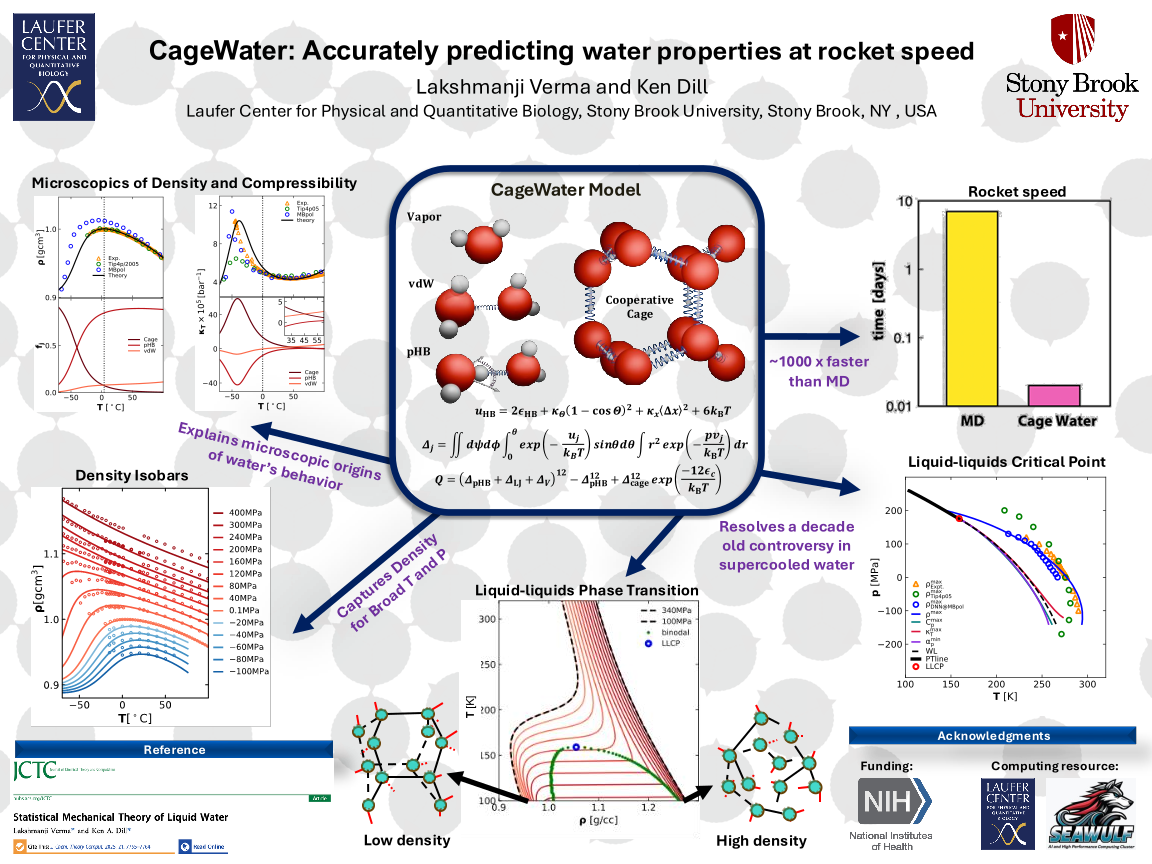
Garden City High School student Amy Xiao was awarded a 1st place Grand Award in Biochemistry at the International Science and Engineering Fair (ISEF) in Los Angeles. According to the competition sponsor, Regeneron Pharmaceuticals, ISEF is the world's largest pre-college science and engineering competition. Amy's project was computationally based, and a critical feature of her work was the molecular docking simulations performed on SeaWulf.
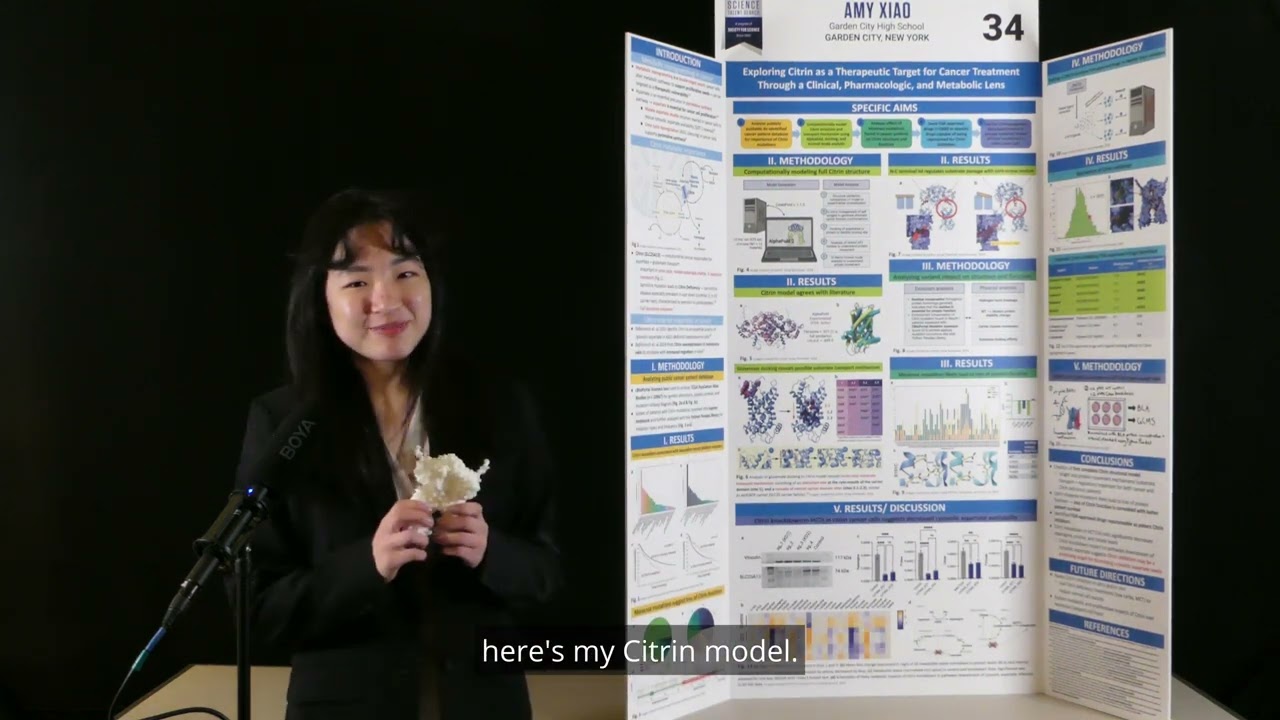
▶ Watch: Amy's Regeneron Science Talent Search finalist video (Society for Science) · Watch on YouTube ↗
Garden City HS faculty advisor Dr. Meredith Foley noted the school's appreciation “for the continuing support provided to our student research program by Stony Brook University. Over the past several years, our student researchers have profited greatly by being able to use the SeaWulf high performance computing cluster at SBU.”

About SeaWulf
Supported by the Institute for Advanced Computational Science and Stony Brook Research Computing and Cyberinfrastructure, SeaWulf is a computational cluster using top-of-the-line components from AMD, Dell, HPE, IBM, Intel, NVIDIA, and numerous other technology partners. An essential resource in the campus community, SeaWulf is also highly valued by research collaborators from across the globe, including students. The system was made possible by $1.85M in grants from the National Science Foundation (awards 1531492 and 2215987) and matching funds from Empire State Development's Division of Science, Technology and Innovation (NYSTAR) program (contract C210148).